Bengal Nose Set
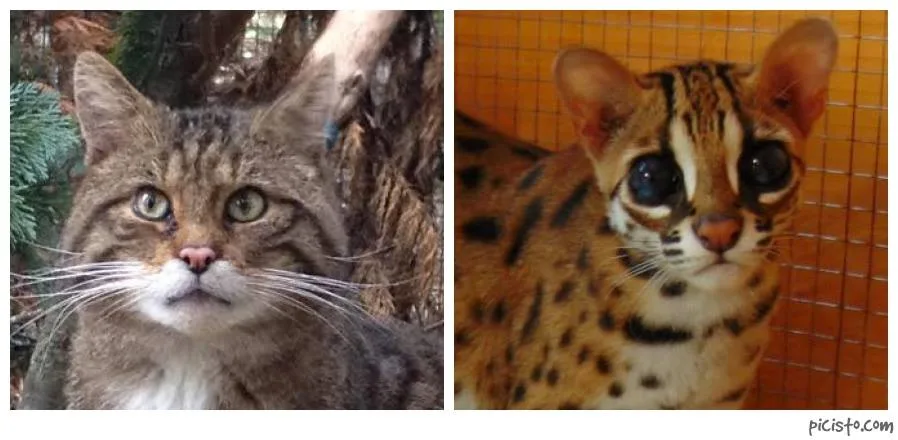
 The Bengal Standard doesn’t say anything about where the nose should be set, but a study of small forest dwelling wildcats leads to only one answer – the nose should set low in between the whisker pads – not above them. In the collage above, there is a Scottish Wildcat on the left and an Asian Leopard cat on the right. Notice the whisker pads are below the nose of the Scottish Wildcat. The nose sits on top of them. In contrast, the nose of the Asian Leopard cat is set in between the whisker pads – they are positioned to the side of the nose.
 One thing to look for in looking for a low set nose is the amount of whisker pad that connects between the bottom of the nose and the lip. The more space you have here, the higher the nose set is. Look for noses that have very little connection of the whisker pads beneath them.
In the collage to the left, you can see how much space there is between the nose and the lip on the Maine Coon on the left and how there is next to no space between the nose and the lip on the Bengal on the right.
Nose set is one of those little details that polishes off the look of the Bengal giving it the essence of a wildcat. A high set nose can really ruin the “wild” look of a Bengal face – even if it is correct in shape and size.
When it comes to nose set there is only one thing you need to remember – look for a nose that is set LOW between the whisker pads.
Below are Bengals with nice low set noses.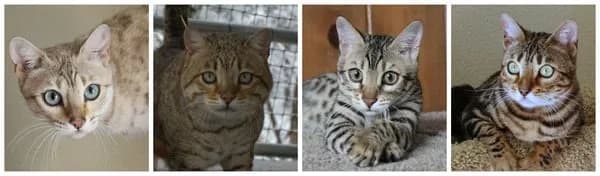
Related articles
How the Forest Shaped the Bengal Ear
For many years, it has appeared as if the top priority of breeders is to achieve small ears. Small ears are not very wild looking when they are triangular. Take […]
Bengal Eyes
The problems with using either oval or almond as the shape for the Bengal eye is that it does not allow for an openness that is needed on a nocturnal […]